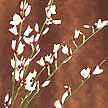
Flower or leaf with continuous margin, without teeth or divisions.
Epiphyte
Plant that grows supported upon another, without being parasitic. Epiphytes use the host plant only as support, without directly taking nourishment. Several bromeliads, for example, are epiphytes.
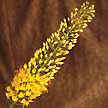
Eremurus
Also known as foxtail lilies or desert candles
Escarp or embankment
Sloped and plane surface like those in the sides of roads, obtained by excavating terrain, or in a dumpsite.
Evergreen
Plants that keep their leaves all year long. (Also see Deciduous.)